Páginas filhas
  • Transfer - ATFA060 Behavior of Triggers (Facilitators)

Versões comparadas

Chave

  • Esta linha foi adicionada.
  • Esta linha foi removida.
  • A formatação mudou.

CONTENTS

Índice
excludeCONTENTS|IMPORTANT!

01. OVERVIEW

This document aims to clarify the operation of entity triggers (FN9 - Transfer heading) in the Transfer (ATFA060) routine.

These triggers work as facilitators, updating the contents of the "Asset Type" grid for all assets found in the transfer, so the user does not have to edit asset by asset and entity by entity, values that repeat themselves for all transferred assets.

It is noteworthy that using the trigger updates the entered entity in all items. If you intend to update only one or a few items, we suggest updating the item desired directly on the "Asset Type" grid. 


Card documentos
InformacaoThe trigger updates all items, whether selected onscreen or not, as the items not selected at the moment of saving are not changed when activating the transfer. The trigger only works as a typing facilitator. After using the trigger, the user can still edit entities of specific items that did not use the entity entered in the trigger.
TituloIMPORTANT!

02. EXAMPLE

See below some examples of use:

Informações
titleContextualization

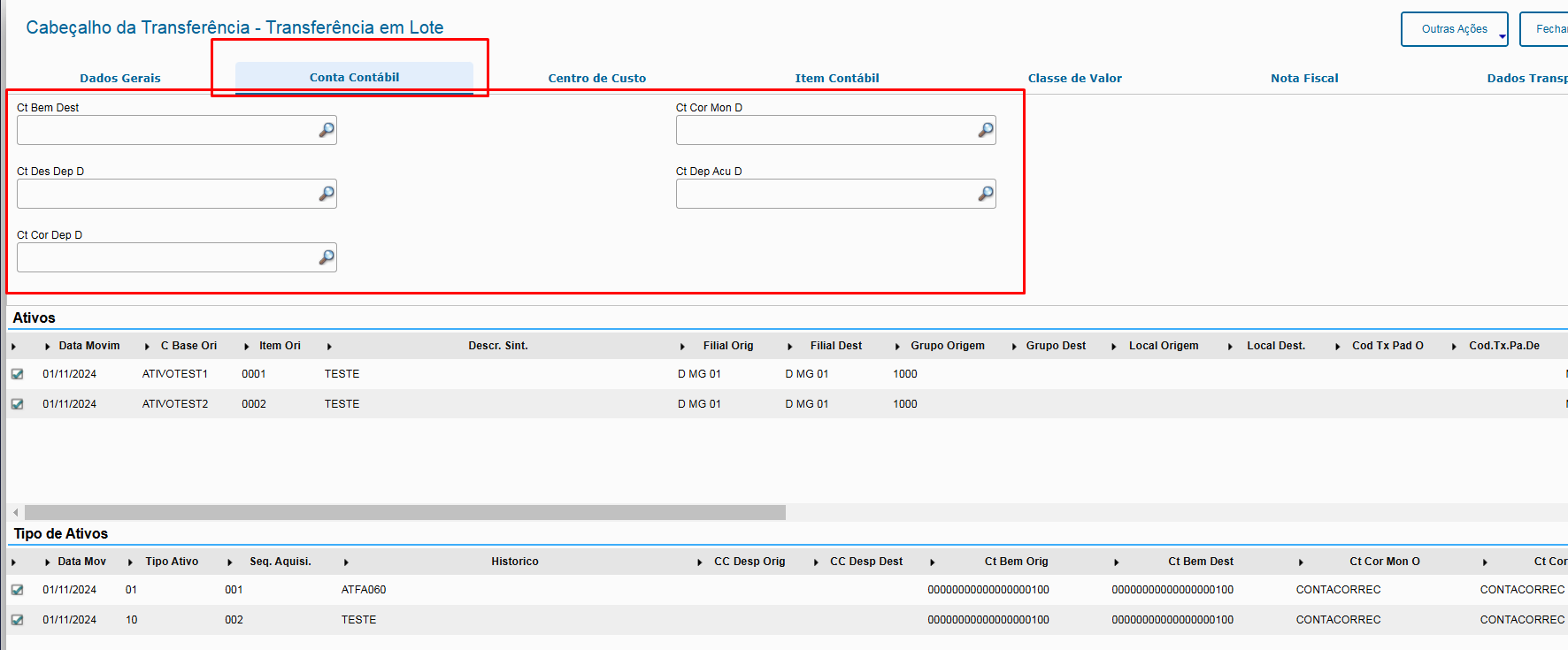
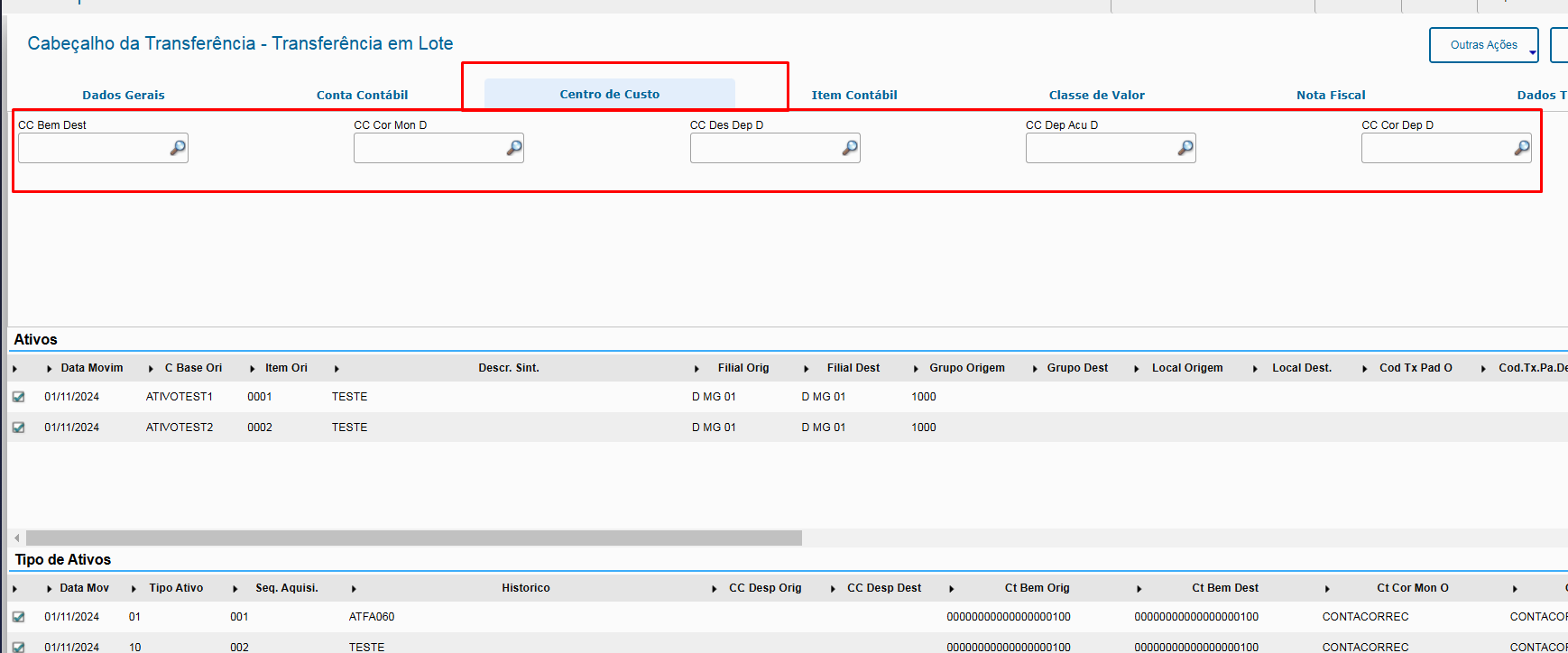
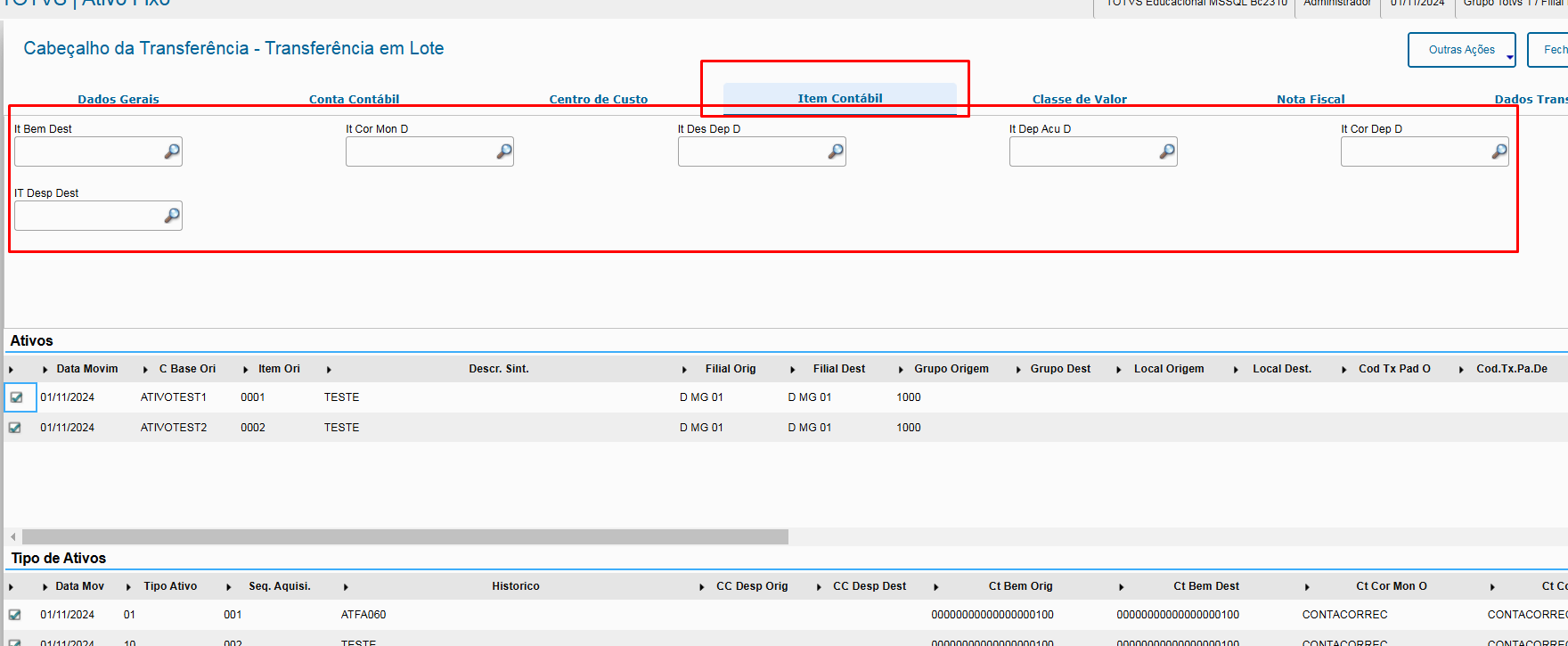
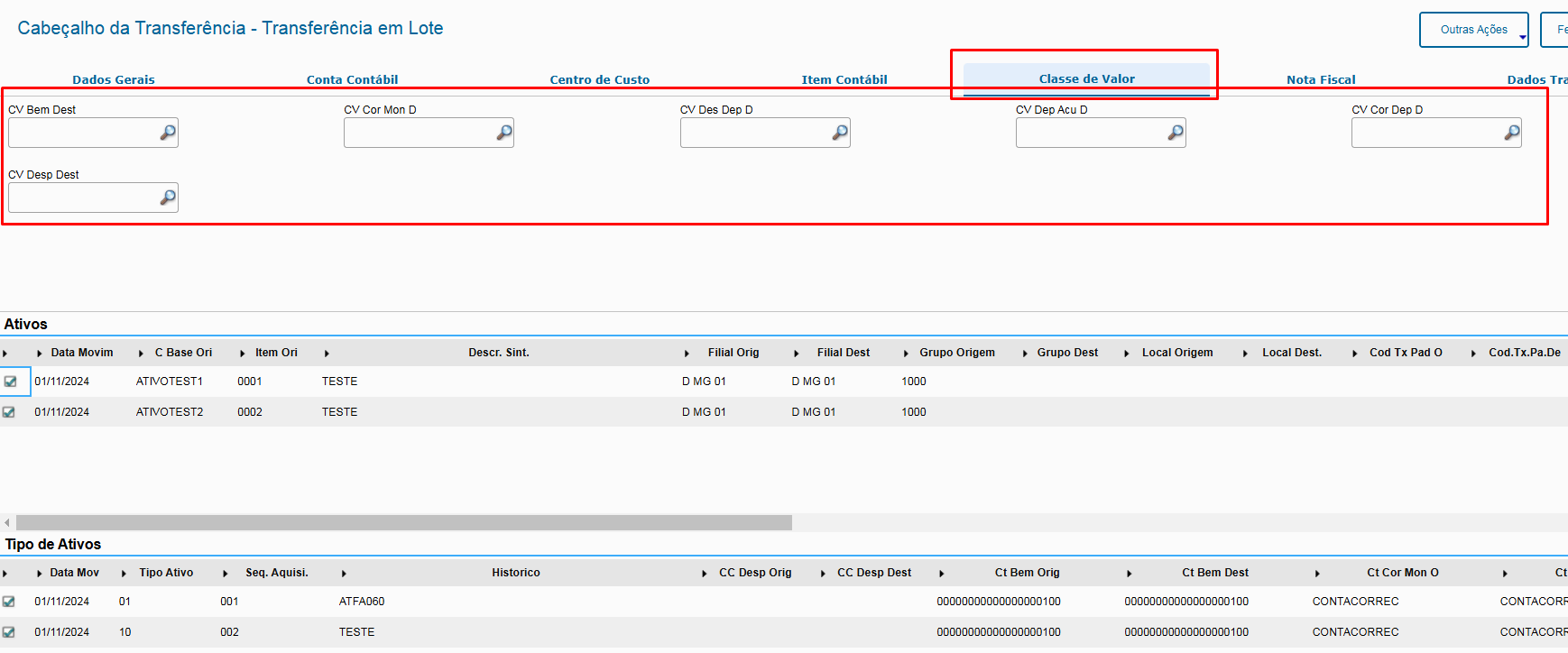
See below the identification of entity triggers (facilitators) found in the transfer (ATFA060) routine:

Ledger Account:

Cost Center:

Accounting Item:

Value Class: 


Example:

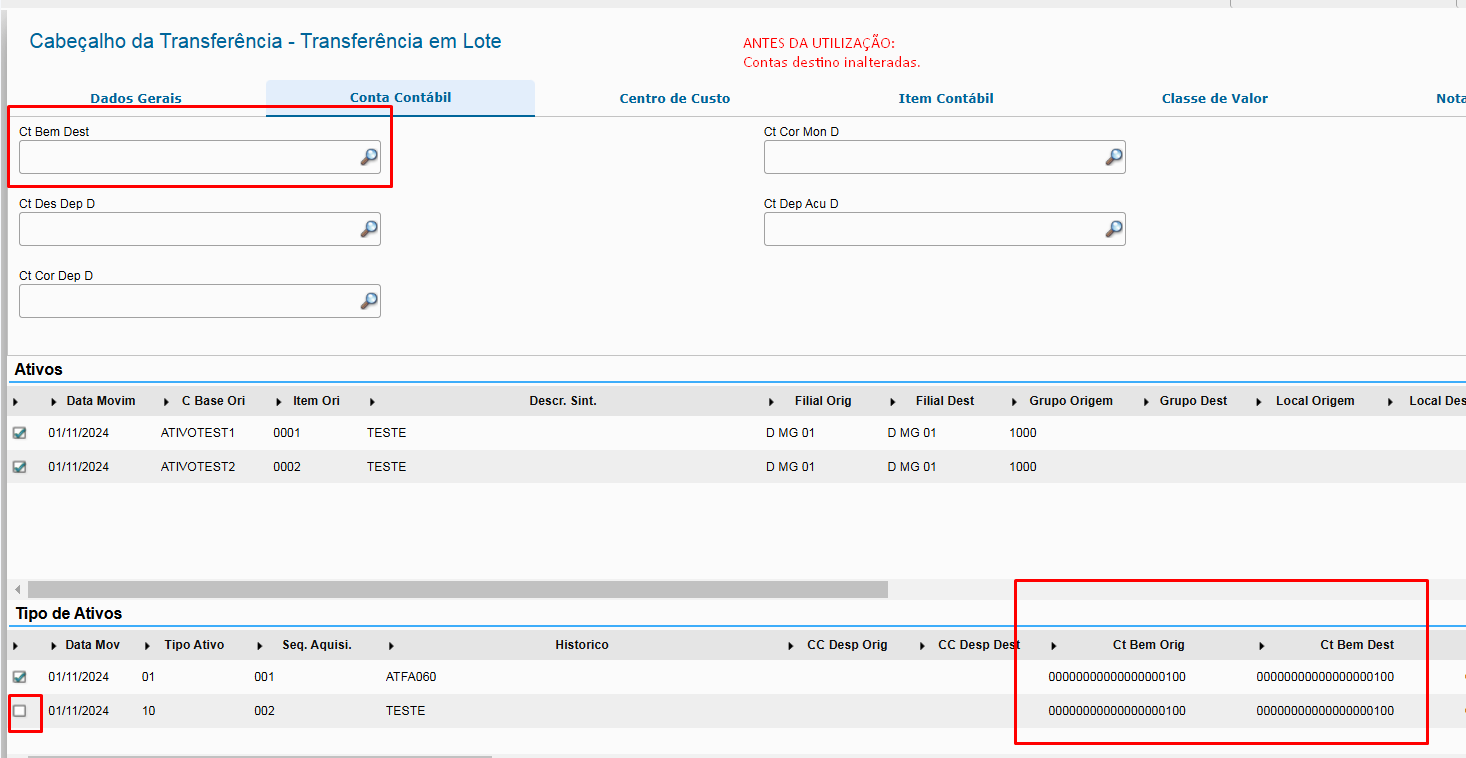
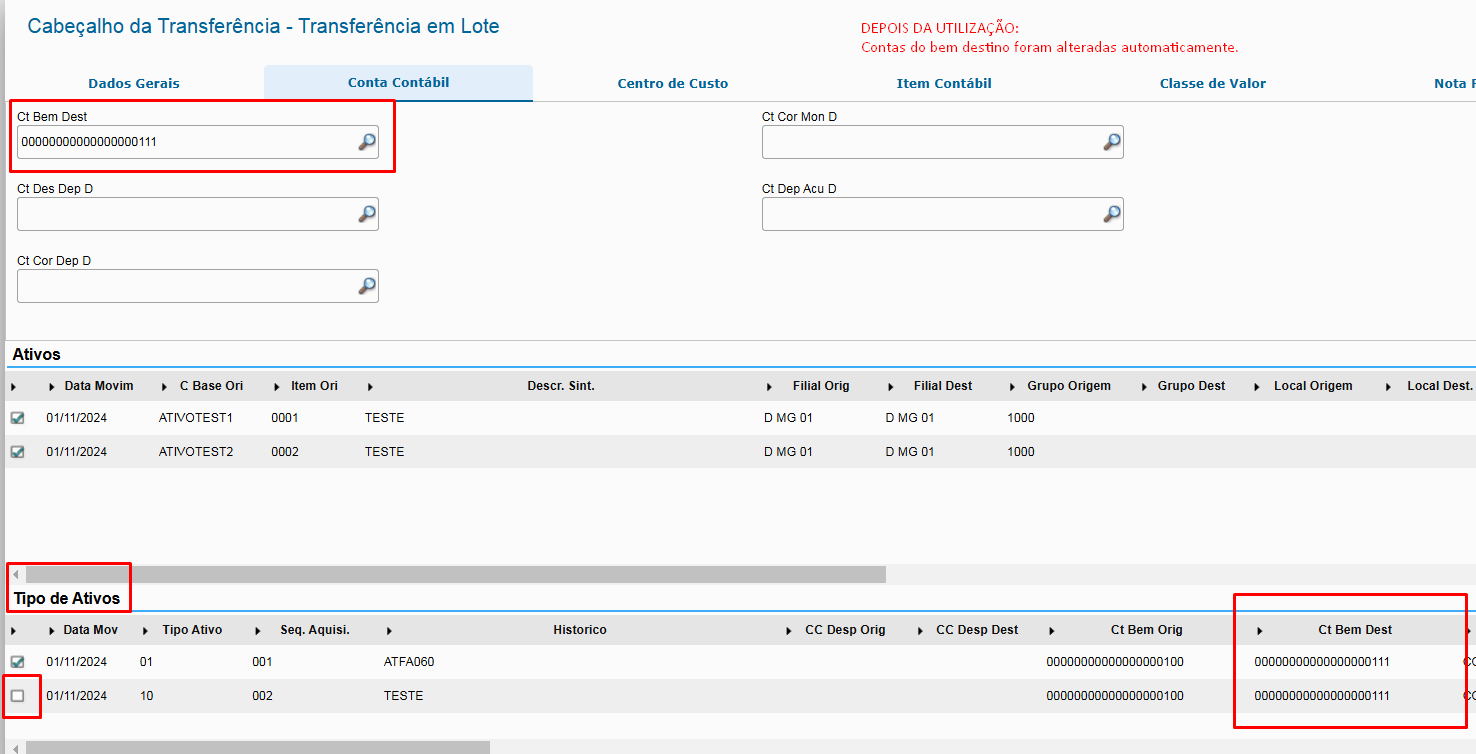
See below an example of how to use the asset's Ledger Account trigger (Before and After):

Before:

After:


Notes: 

  1. Note that, even if the asset is not selected, the system updates its value. This behavior occurs because, if the selection was incorrectly made when reselecting the asset, the data are already updated with the entity information entered in the trigger, and if the removal of the selection is in fact correct when activating the transfer, any edited information is ignored, because the system only considers selected lines when saving.
  2. The system updates all fields related to the entity on the "Asset Type" grid, regardless of the asset selected on the "Assets" grid.
  3. After using the trigger, the fields of the "Asset Type" grid remain available for use, and their value does not have to be equal to the one entered in the trigger. This makes things easier on scenarios in which most assets use a single entity and only a few items use specific entities.


04. TABLES

  • FN9 - Transfer Header    
  • FNR - Transferred Assets
  • FNS - Transferred Balance Types