
01. Fixed Assets: use of ICMS and IPI credits (F4_CREDICM / F4_CREDIPI) through the Tax Configurator
Cost Rule x Fixed Asset
In the Tax Configuration, you can define the Cost operation within the Tax Document Calculation Rule.
Given the options 0 – No Action, 1 – Add, 2 – Subtract.
Access to learn more:
New Fixed Asset Value Mechanism - Tax Reform - Microsiga Protheus Line - TDN
ICMS
1. "Add = Debit" → Operation equals "1"
- Even when it's an entry, if the operation is set to "Add," it means the ICMS value won't be used as a tax credit — it will be incorporated into the cost of the asset or good.
- In this case, "Debit ICMS" doesn't mean the company will pay this ICMS to the state. Instead, it means the company won't receive a credit for it — the ICMS will be considered part of the asset's or good's cost.
Therefore, when "Add" is chosen, the ICMS credit is understood as "No" ("N") → You can't receive a credit for this ICMS; you can only debit it. In other words, the ICMS value will be added to the value of the fixed asset.
Example:
- Inbound invoice with ICMS shown separately: R$ 2,000
- Product: Machine for the production sector (fixed asset)
- The company will not take a credit for this ICMS.
System Operation Configuration: "Add = Debit"
Result:
- The ICMS will not be posted as a credit.
- The value of R$ 2,000 will be added to the machine's book value.
2. "Subtract = Credit" → Operation equals "2"
- When the operation is configured as "Subtract", it indicates that the company is entitled to the ICMS credit shown on the invoice.
- "Credit ICMS" means the company can deduct this value from the ICMS owed on its outputs (sales). In other words, this ICMS enters as a tax credit and is not added to the asset's cost.
Therefore, when "Subtract" is chosen, the ICMS credit will be Yes ("S") → You can take a credit for the ICMS value on the incoming invoice. That is, the ICMS amount will be subtracted from the value of the fixed asset if the tax is included in the invoice total.
Example:
- Product: Pickup truck for deliveries
- Invoice amount: R$ 120,000
- ICMS shown separately: R$ 14,400
System Operation Configuration: "Subtract = Credit"
Expected result:
- The company will be able to credit the R$ 14,400 of ICMS, proportionally.
- The ICMS value will not be incorporated into the cost of the vehicle in the fixed asset.
- Fixed asset value: R$ 105,600
IPI
1. "Add = Debit" in the case of IPI:
- An incoming invoice from a supplier is being entered. This invoice may or may not have IPI highlighted on it. The question is: will this operation generate an IPI credit for your company or not?
- Even though it's an incoming entry, when you choose the "Add" operation, you are indicating that the IPI value will be added to the cost of the asset — it won't be credited.
- In this case, "Debit IPI" means the IPI value cannot be used as a credit; it will be incorporated into the cost of the "asset" goods.
- Therefore, the company cannot take a credit for this IPI because it's generating a debit.
That's why when "Add" is chosen, the IPI credit will be No "N" → You can't take a credit because it's generating IPI payable. In other words, the IPI value will be added to the value of the fixed asset.
Example:
- Incoming invoice with IPI highlighted in the amount of R$ 1,000.
- Product: Equipment for office use (fixed asset).
- The company is not an IPI taxpayer.
Operation configuration: "Add = Debit"
Result:
- The IPI does not generate a tax credit.
- The amount of R$ 1,000 will be added to the value of the asset, increasing the accounting cost of the asset.
2. "Subtract = Credit" in the case of IPI:
- Here, "subtract" refers to an incoming goods entry, such as the purchase of raw materials with IPI highlighted.
- If the company is an IPI taxpayer, it can take a credit for this tax paid on the incoming entry.
- "Credit IPI” → means this value can be used to offset the IPI that the company will pay on its outputs.
Therefore, when "Subtract" is selected, the IPI credit will be Yes "S" → It can be claimed, because it is an entry with credit entitlement. That is, the IPI amount will be subtracted from the value of the fixed asset if the tax is included in the invoice total.
Example:
- Product: Industrial cutting machine
- Product value (without taxes): R$ 100,000
- ICMS highlighted: R$ 12,000
- IPI highlighted: R$ 6,000
- Invoice Total: R$ 118,000
Operation configuration: "Subtract = Credit"
Result:
- Value of the fixed asset posted to the asset account:
R$ 112,000 (value with ICMS and without IPI)
- Value of the fixed asset posted to the asset account:
3. No Action → Operation equals "0" or Cost not filled
There will be no action/it will not be part of the fixed asset's value.
02. Fixed Assets: treatment of CBS, IBS, IS and IPI
The current Protheus configuration, through the Tax Configurator, is flexible and allows you to include or exclude the CBS and IBS values from the fixed asset's cost. However, according to the technical guidance from TOTVS's Tax Consulting, the CBS and IBS values should be treated as recoverable. This means they should not be part of the asset's book cost, as outlined in CPC 27.
Regarding the IPI, the Regulation of the Tax on Industrialized Products (RIPI) prohibits claiming credit for the amount shown on the invoice for the acquisition of goods recorded as Fixed Assets. Therefore, the highlighted value must be incorporated into the acquisition cost of the acquired asset.
Official documentation from the tax consultancy:
Tax Reform - Composition of Fixed Assets
OSegment Consultancy Guidance - Tax Reform - Fixed Assets
2.1. Should the fixed asset be recorded at the total value of the invoice, including CBS, IBS, IS, and IPI?
No. The asset should only be capitalized at the acquisition value plus any non-recoverable taxes.
- Included in the cost: IPI and IS (cumulative taxes).
- Not included in the cost: IBS and CBS (they are non-cumulative and generate credits, so they are recoverable).
2.2. Should the asset's depreciation consider the total invoice value or exclude recoverable taxes?
Depreciation should only consider the value capitalized in the Fixed Asset account, which means excluding recoverable taxes (IBS/CBS).
Therefore, the depreciable value corresponds only to the actual non-recoverable cost of the asset.
2.3. What determines whether a tax is included in the acquisition cost of the fixed asset?
According to CPC 27, only non-recoverable taxes are included in the asset's acquisition cost.
- If the tax generates a credit, it is not part of the asset.
- If it doesn't generate a credit (cumulative), like IS and IPI, it is included in the cost of the asset.
2.4. With the Tax Reform, what changes in the accounting for IBS and CBS taxes?
IBS and CBS are non-cumulative, meaning they generate a tax credit. Therefore, they are not part of the fixed asset's cost and are recorded as taxes to be recovered, so they are not included in the depreciation basis.
2.5. Does the Excise Tax (IS) make up the cost of the asset?
Yes. The IS is a cumulative tax (it doesn't generate a credit and is levied only once). Therefore, it is part of the asset's acquisition cost and will be included in the capitalized value of the fixed asset.
2.6. Is IPI still included in the value of the fixed asset?
Yes. According to RIPI, IPI cannot be taken as a credit when it involves fixed assets, so it is part of the acquisition cost and is included in the asset's value.
2.7. How does the accounting for fixed assets change with the Tax Reform in effect?
Practical example with the reform in effect:
- Value of the asset: R$ 100,000
- IS (10%): R$ 10,000
- CBS/IBS (30% on R$ 110.000): R$ 33,000
- Total Invoice Value: R$ 143,000
Accounting Entry:
- D - Fixed Assets: R$ 110,000
- D - IBS/CBS recoverable: R$ 33,000
- C – Cash/Bank: R$ 143,000
2.8. And how was the accounting done before the reform?
Before the reform, taxes such as ICMS, PIS, and COFINS (recoverable) were already excluded from the value of fixed assets. Example:
- Machine Value: R$ 10,000
- IPI: R$ 1.000 (cumulative)
- ICMS + PIS/COFINS (recoverable): R$ 2,950
Accounting Entry:
- D - Fixed Assets: R$ 8,050
- D – Taxes to recover: R$ 2,950
- C – Cash/Bank: R$ 11,000
2.9. Does the Tax Reform change the concept of a Fixed Asset?
No. The concept remains the same as per CPC 27. The asset is made up of the acquisition cost plus non-recoverable taxes and excluding recoverable ones, even with the introduction of new taxes (CBS/IBS/IS).
03. With NT 2025.002, will the credit be automatically generated by the Tax Authority and no longer manually posted via ERP?
Based on NT 2025.002, this credit will depend on the NF-e being issued with the CST/CClassTrib fields correctly filled, the effective payment of the tax by the supplier, and the subsequent registration in the "fiscal current account" within the Tax Authority's environment. In other words, the taxpayer will no longer be able to book this credit directly in the ERP, as is currently done via CIAP. Is this interpretation correct? Will the credit be automatically generated in the Tax Authority's system, and no longer through a manual entry in the ERP??
R: Upon the full implementation of the new assessment model with a fiscal current account, the CBS and IBS credit on fixed assets will be centralized on the Tax Authority's platform. This will be based on the correct completion of the NF-e (tags such as CST, cClassTrib, among others), the effective payment of the tax by the supplier, and automatic validation within the RFB or IBS Management Committee environment. The expectation is that the credit will no longer be directly appropriated via CIAP or ledger entry in the ERP. The public platform will control and authorize the credit, which the company will be able to consult.
04. What should be the expected behavior in the ERP for posting a fixed asset invoice in the new model (CBS/IBS)?
Scenario:
Company A purchases a machine for R$ 100,000 from Company B, with R$ 10,000 in CBS/IBS.
Value paid to the supplier: R$ 110,000.
The CBS/IBS does not make up the value of the fixed asset (as per the TDN article - "Tax Reform - Composition of Fixed Assets - Segment Consultancy - TDN").
a) Should the ERP generate an accounts receivable entry in the Financial module, related to the credit to be refunded/offset?
R: No. Since the credit will be generated and controlled by the Tax Authority, the ERP should not automatically create an account receivable. This credit will be consulted and used in future offsets via the fiscal current account.
b) Should a journal entry for the tax to be recovered be made to an account like "taxes to be recovered," even before the Tax Authority's approval?
R: Partially yes. Although the credit is subject to approval by the Tax Authority, an asset can be recorded (e.g., "CBS/IBS to be recovered"), provided there is clear control that the value is not yet available until approval is granted on the government platform. The accounting recommendation is to use a temporary or contingent account, based on the rules of CPC 27.
c) Or will this entire process (control, deferral, offsetting, and credit write-off) be completely external to the ERP, managed through the government’s own platform?
R: Yes, in part. The appropriation and validation will be done externally, but the ERP can integrate with the Tax Authority's environment to:
import available credits;
track depreciation history linked to the tax credit;
correctly apply monthly deductions.
05. According to Art. 406 of LC 214/2025, does the IBS/CBS apply to the gain, the total alienation value, or the net book value?
The Art. 406 of Complementary Law 214/2025 should be interpreted as meaning that the IBS/CBS is levied on the gain (the difference between the sale value and the net book value), on the total disposal value, or simply on the net book value (original value minus accumulated depreciation)?
R: The taxation applies to the alienation value (sale price), not to the gain or net book value (book value minus depreciation). In other words, even if the asset is fully depreciated, the tax will be levied on the total sale value.
5.1. In calculating the IBS/CBS tax base, are there rules on excluding depreciation, sales with losses, fully depreciated assets, and the definition between the full sale value or proportionality?
Is there a provision for excluding accumulated depreciation for the purpose of calculating the tax base? Is there a provision or draft already prepared that details this calculation? In sales with a value lower than the net book value (loss), would there be a minimum tax or an exemption from IBS/CBS? How should fully depreciated assets be treated? Would the tax base be the full sale value or is there a proportionality rule?
R: The legal text does not provide for automatic exemption for sales with losses or depreciated assets. Detailed regulations are still lacking, but the initial understanding is that there is no exclusion of accumulated depreciation from the IBS/CBS tax base. Future regulations should clarify cases of:
sales with losses;
donations or non-onerous write-offs;
alienation of fully depreciated assets.
5.2. Will accumulated depreciation be considered in the tax base? What is the actual taxable base: the net value of the asset or the sale value? Could examples with values be provided to clarify?
Tax Base on the Sale of Fixed Assets. There is an initial understanding that:
“Taxation will be 'gross,' and the net acquisition value will be the reference for calculating the taxable base.” However, the answers to questions 05 and 5.1 and the official documentation from Segment Consultancy Segment Consultancy Guidance - Tax Reform - Fixed Assets - Segment Consultancy - TDN state that:
"Taxation is levied on the alienation value (sale price)." "Detailed regulations are lacking, but the initial understanding is that there is no exclusion of accumulated depreciation from the IBS/CBS tax base."
Given this, will accumulated depreciation be considered in the tax base? What is the actual taxable base: the net value of the asset or the sale value? Could examples with values be provided to clarify?
R: The art. 406 of LC No. 214/2025 only makes the tax incidence conditional on the existence of a proper fiscal document and the asset's permanence in the fixed asset account for more than 12 months. However, the law does not mention accumulated depreciation or net book value; it uses the expression "incidence (...) on the sale," which, in tax law, indicates a tax base on the value of the sales operation (alienation revenue).
Accumulated depreciation does not affect the tax base, only corporate accounting and the calculation of IRPJ/CSLL (capital gain or loss). As mentioned previously, detailed regulations for these operations are still lacking, but this is the current technical understanding.
Here are some examples:
Example 1 – Sale value greater than net value
Acquisition in 2027: R$ 100,000.00
Accumulated depreciation until the sale in 2029: R$ 40,000.00
Net book value: R$ 60,000.00
Sale value: R$ 70,000.00
IBS/CBS tax base = R$ 70,000.00 (sale value)
(Accumulated depreciation does not reduce the base).
Example 2 – Sale value less than net value
Acquisition in 2027: R$ 100,000.00
Accumulated Depreciation: R$ 40,000.00
Net book value: R$ 60,000.00
Sale in 2029 for R$ 50,000.00
Tax base IBS/CBS = R$ 50,000.00 (sale value)
Even though it results in a book loss compared to the net value, the tax is levied on the alienation revenue.
Example 3 – Sale after full depreciation
Acquisition: R$ 80,000.00
Accumulated Depreciation: R$ 80,000.00
Net book value: R$ 0.00
Sale in 2030 for R$ 10,000.00
IBS/CBS tax base = R$ 10,000.00
Even though the asset is fully depreciated, the sale generates revenue and will be taxed.
06. Does LC 214/2025 require records of fixed asset write-offs even without CBS/IBS incidence (such as due to obsolescence or donation)?
Are companies required to maintain detailed records of fixed asset write-offs even when there is no CBS/IBS charge? In taxable write-offs, according to Article 406, and non-taxable ones. In non-onerous write-offs (e.g., obsolescence, donation), does LC 214/2025 require any additional record or communication to tax authorities, even without CBS/IBS incidence?
R: Yes. Even when there is no tax incidence (e.g., write-off due to obsolescence, loss, or donation), the company must maintain accounting and tax control of these events.
This is necessary to:
justify the proportional reversal of credits not yet utilized;
maintain traceability of tax vs. accounting depreciation;
avoid future tax disputes.
Write-off records are mandatory, even without tax due, and must follow the criteria and layouts that will be defined by regulations from the RFB and the Management Committee.
07. How is the procedure for Reversing CBS/IBS Credits in cases of return, spoilage, loss, or misplacement of assets, or change of use destination, being handled in light of LC 214/2025?
R: In Art. 47 and its §§ 6 to 8 allow for a more complete and accurate interpretation of the legal treatment given to the reversal of IBS and CBS credits in cases of return, scrapping, theft, loss, misplacement, or change in the intended use of goods related to fixed assets.
§ 6° – Mandatory Reversal in Cases of Perishment, Deterioration, Theft, or Misplacement The taxpayer who acquired the asset and appropriated the credit must reverse that credit if the asset:
perishes,
deteriorates,
is stolen or misplaced.
In other words, the credit cannot be maintained in 00situations that make it impossible to use the asset for the purpose that justifies the right to the credit.
§ 7° – In cases of theft or robbery of fixed assets, the credit reversal must be proportional to the time the asset was in use. This will be done based on the asset's estimated useful life and depreciation rates, which are yet to be defined in regulation.
Example:
Machine with a R$ 12,000 credit (useful life: 5 years).
It is stolen after 2 years.
R$ 4,800 has already been appropriated.
Reversal = R$ 7,200 (remaining unused balance).
§ 8° Return or cancellation with a non-taxpayer recipient in the regular regime. This means that if the recipient of the merchandise or service is not a taxpayer in the regular regime, but there is a return or cancellation of the transaction, the supplier can recover the credit, even if it has already been paid in the original transaction. This rule ensures that the regular supplier is not penalized with the definitive loss of the IBS/CBS credit in transactions that are not completed or are undone.
7.1. The text above (Question 7) mentions that the calculation will also depend on "depreciation rates defined in regulation." Does this indicate that, in the future, there might be a more complex formula that changes this example? Is this truly the current understanding?
R: The law mentions that this calculation will be proportional to the asset's useful life and the depreciation rates defined in regulation, applying the straight-line method. This means the useful life is divided into months, and the credit is appropriated gradually. In the future, the regulation may detail "depreciation rates" by asset category, which could make the calculation more complex and change the reversal amount. Until that regulation is enacted, the safe procedure is to use the simple proportional criterion.
08. Does NT 2025.002 foresee events 8.5 to 8.18 as a way to reverse fixed asset credits, and is there already formal guidance from SEFAZ for their use?
Does NT 2025.002 explicitly foresee events 8.5 to 8.18 as a way to reverse credits in situations like loss, theft, internal consumption, etc.? Is there formal guidance from SEFAZ or another body on using these events for fixed asset control?
R: NT 2025.002 explicitly addresses events 8.5 to 8.18 as mandatory instruments for recording facts that impact the right to an IBS/CBS credit. In the new model, they replace manual reversal entries and CIAP control.
These events are considered part of the assisted digital bookkeeping, as per LC 214/2025 (Art. 47, §§ 6 and 7). They must be used for:
Loss, perishment, theft, robbery;
Change of use destination;
Personal or internal consumption;
Asset capitalization;
Succession, return, etc.
There is no separate normative act from the Federal Revenue Service (RFB) or the Management Committee (as of now), but NT 2025.002 has an operational force equivalent to a normative technical manual, as it is officially published on the National NF-e Portal website.
09. Can the issuance of a symbolic NF-e (model 55, CFOP for internal write-off) by the acquirer be accepted to formalize the reversal? Or must the events (e.g., 8.5 to 8.18) provided for in the NT be mandatorily used
R: NT 2025.002 makes it clear that the assisted tax calculation depends on the formal registration of specific events (e.g., 8.18 for theft/loss). In other words, there is no provision for using a symbolic NF-e as a valid means to reverse IBS/CBS credits — this practice will not have an effect on the automatic controls of the Federal Revenue and could generate inconsistencies in the calculation.
10. Is there any official understanding of what the process for sending the fiscal events (such as event 8.18 - theft) provided in NT 2025.002 will be?
R: Yes, there are technical guidelines already provided in NT 2025.002 v.1.10 itself.
The events will be submitted via the NF-e events WebService, using the existing model but with new event types (e.g., code 112130 for event 8.18 - theft/loss in CIF transport).
The event must be sent from the same environment where the original NF-e was authorized (e.g.,: SVRS, SEFAZ-SP).
Each event will require:
Reference to the original NF-e key;
Completion of mandatory fields such as justification, date of occurrence, location, etc.;
Digital signature of the event's author.
The RFB and the states are concurrently developing the "digital fiscal current account" environments, which will use this information to approve credits, control reversals, and conduct tax audits.
11. Is the issuance of an NF-e with purpose code 5 (credit) or 6 (debit) exclusively for the supplier/service provider, or will there be any scenario where the acquirer can issue this type of document?
R: According to section 4 of NT 2025.002 v.1.10, invoices with purpose 5 (credit) or 6 (debit) are, as a rule, issued by the supplier or service provider, as they reflect adjustments to the tax owed by the issuer. However, there are exceptions, such as in the case of credit notes issued by the acquirer to document the appropriation of a fine/interest credit when the supplier fails to do so, as detailed in the NT itself:
"If the supplier does not issue the debit note, the acquirer has the alternative of issuing a credit note of type 01 – Fine and interest to take the credit."."
However, this use by the acquirer is conditioned on the supplier's "Debit Acceptance" (event 8.7).
12. Must event 8.x be sent every time there's a write-off, even when the entire credit has already been used/appropriated, or only when there's a credit balance to reverse?
R: The NT does not expressly require sending the event if the entire credit has already been appropriated and there is no remaining value to reverse. The logic behind events 8.x (such as capitalization, destination for consumption, perishment, theft, etc.) is to manage the credit balance not yet appropriated in the assisted calculation environment.
Thus, the events must be used when there is an impact on the calculation of credits not yet offset, that is, when there is a credit to be reversed.
13. Do the tax events 8.x also apply to fixed assets acquired before the full effectiveness of IBS/CBS, or only to assets purchased after the new rules come into effect?
For fixed assets acquired before the full effective date of the new IBS/CBS system (e.g., during the transition phase until 2026), will fiscal events 8.x also be required? Or do these events apply exclusively to assets acquired after the full operational implementation of the new fiscal rules?
R: The events in the 8.x series are part of the new assisted calculation model planned for the IBS/CBS and have legal validity only from January 5, 2026, according to the NT 2025.002 v.1.10 schedule.
Therefore:
Events 8.x apply only to assets acquired after the full effective date of the new tax rules (from January 2026 onwards).
Assets acquired before this date remain subject to the rules of the previous regime, including manual control via CIAP or internal mechanisms.
14. How will the credit reversal control for old assets that have already been partially credited under the previous regime be handled?
R: NT 2025.002 does not directly address the reversal of credits for assets acquired before the new system's effective date. However, based on LC 214/2025, Art. 47, §§ 6 and 7, it's possible to infer that:
The obligation for proportional reversal in cases such as theft, robbery, or perishment still applies to fixed asset credits.
For assets prior to 2026, control will continue to be done internally (ERP/CIAP), with no requirement for the issuance of fiscal events via NF-e.
Any future supplementary CBS/IBS regulation may clarify transition mechanisms.
15. For operations with suspension (Art. 109), is it correct to fill the gTribRegular group of NT 2025.002 with: indExigibilidade = 2 (suspended)?
Future CSTReg (when defined) for suspension? Full taxation rates and values?
R: Yes, based on Art. 109 of LC No. 214/2025 and the rules in Technical Note 2025.002 v1.10, the gTribRegular group for operations with IBS/CBS suspension should be filled out using the criteria below, respecting the tax logic and the assisted calculation model:

Field | Expected Value | Justification |
Rates (pIBS, pCBS) and values (vIBS, vCBS) | Fill with the full rates and corresponding values, even with a suspension | The NT directs that the tax value must be reported even in operations with suspension, for the purpose of assisted calculation and Tax Authority control. |
cCSTReg | Specific CST for suspension (to be defined in a future official table) | NT 2025.002 v1.10 states that there will be specific CSTs for situations like suspension, exemption, etc. (official tables are pending publication). |
indExigibilidade | 2 - Suspended | According to the tax liability indicator table, when the tax is suspended by a specific rule (as in Art. 109). 109). |
Important: The value of the suspended tax should not be included in the total amount payable by the acquirer, but it must be on the invoice for bookkeeping and traceability purposes.
16. How will the Tax Authority be informed of the effective incorporation into the fixed asset?
R: The incorporation into the asset will be communicated to the Tax Authority through Fiscal Event "8.8 - Item Capitalization," as defined in NT 2025.002 v1.10.
Field | Information |
Event | 8.8 – Item Capitalization |
Autor | Recipient of the NF-e (Acquirer) |
Function | To inform the Tax Authority that the item has been effectively incorporated into the fixed asset. This converts the suspension to a zero rate, as per §2 of Art. 109 of LC 214/2025. |
Condition | It must be sent after the acquisition NF-e is issued, within deadlines that will be defined in supplementary regulation. |
17. What happens if the company does not report the capitalization?
R: The zero-rate benefit will be lost, as per §3 of Art 109 of LC 214/2025.
And the company:
Must pay the suspended IBS/CBS;
With fines and interest, from the date of the taxable event (purchase or import).
18. Is there any provision for ancillary obligations regarding the new taxes, such as EFD - Digital Tax Bookkeeping?
R: According to Complementary Law No. 214/2025, there is still no express provision for an ancillary obligation in the form of a Digital Tax Bookkeeping (EFD). To date, ancillary obligations are concentrated in the electronic tax documents themselves, which now play a central role in the tax calculation and control process, as they contain all the necessary information for the taxation of IBS and CBS.
19. Does the immediate IBS/CBS credit on capital goods depend on payment by the supplier? In installment purchases, is the credit total upon acquisition?
Is the full and immediate IBS and CBS credit provided for in Art. 108 of LC 214/2025 upon the acquisition of capital goods also conditioned on the tax payment by the supplier? In an example of a purchase paid in 60 installments, is it possible to take the entire credit at the time of acquisition?
Article 108 of Complementary Law No. 214/2025 provides that "the full and immediate credit for IBS and CBS is ensured upon the acquisition of capital goods, in accordance with Art. 47 of this Complementary Law". Reading the expression "full and immediate" in isolation could lead to the interpretation that the credit would be recognized at the exact moment of the asset's acquisition, regardless of any other condition. However, the final part of the provision, by expressly referring to Article 47, disproves this conclusion. Article 47, in its §1, establishes the general rule for credit appropriation:
(...)
“The appropriation of the credit [...] will be conditioned on the proof of the extinction of the IBS or CBS debt related to the operation by the supplier, observing the provisions of Art. 27 and 31 to 35 of this Complementary Law.".
(...)
Therefore, even for capital assets, the credit can only be appropriated after proof of the corresponding tax debt has been extinguished. In practice, this means waiting for the IBS and CBS levied on the operation to be effectively paid according to any of the methods provided in Article 27.
The difference brought by Article 108 is not in waiving the payment condition, but in the way the credit is used: the credit will be full (100% of the IBS and CBS value highlighted on the tax document) and single (all registered at once, not in a fragmented way over several periods, as currently happens with credits fragmented over 48 months).
In the case of acquiring a capital good with payment in 60 installments, the acquiring company cannot take the full credit at the time of purchase if the supplier's debt has not yet been extinguished. The appropriation will occur when the system confirms the tax payment. This can be done proportionally (if the supplier's payment follows the installments) or in full (if there is an early or full split payment).
20. Should event 211130 be sent only when the asset is capitalized and begins to depreciate? And in the case of an asset under construction, like a machine being assembled?
Should event 211130 (Item Capitalization) be sent upon receipt of the asset or only when it is integrated into the definitive fixed asset and begins to be depreciated?? In the case of a purchased machine that needs to be assembled and is initially recorded as a fixed asset in progress for six months, when should the event in question be sent?
The regulations published so far do not explicitly detail situations involving assets received disassembled, produced internally, or under construction. Because of this, different interpretations may exist: some taxpayers believe the event should be sent upon physical receipt, while others consider that the submission occurs at the time of accounting integration.
However, based on what is described in the Taxpayer Guidance Manual (MOC), it is this Consultancy's understanding that event 211130 (Item Capitalization) must be transmitted at the moment the asset is effectively integrated into the fixed asset. This is when it ceases to be recorded as a "fixed asset in progress" and begins to be listed in a definitive fixed asset account (such as machinery and equipment), being available for use and subject to depreciation.
This interpretation stems from two central points:
1 - Event Function (MOC, item 8.8) – The purpose is to enable the tax administration's systems to properly identify the deadline for assessing any requests for credit reimbursement, under Art. 40, I of LC 214/2025. This deadline is related to the moment the asset begins to generate tax effects, and not to its simple physical entry into inventory or fixed assets in progress.
2 - Accounting Concept of Capitalization (CPC 27 / IAS 16)
- An asset is only recognized as a fixed asset when it is in a condition for use for its intended purpose. While it is under construction, assembly, or testing, it should be classified as a "fixed asset in progress," without depreciation beginning.
Applying to the example:
Machine Receipt: Record in "fixed asset in progress" → do not send event.
Assembly/construction (6 months): Continues in "fixed asset in progress" → do not send event.
Completion of assembly and start of use/depreciation: Integration into definitive fixed asset → send event 211130.
It is expected that tax administrations will regulate this point more explicitly, either through official Q&A or an adjustment to the MOC, clarifying the treatment for assets initially recorded as fixed assets in progress. This would clarify whether the milestone for sending the event is the date of physical receipt or the date of integration into the definitive fixed asset, as well as how to proceed in cases of internally built or partially acquired assets.
21. How will the appropriation of presumed CBS credits related to the extinction of PIS/Cofins be done? Will it be necessary to generate an event for these credits?"
The Art. 380 of Complementary Law 214/2025 states that PIS/Pasep and COFINS Contribution credits, which, until the date of the extinction of these taxes, were being appropriated based on depreciation, amortization, or a monthly value quota, must continue to be appropriated as presumed CBS credits. So, how will the appropriation of these presumed credits be done? Will it be necessary to generate an event for these presumed credits?
R: The exact system for the appropriation of these presumed credits still depends on regulation from the Federal Revenue. Likewise, there is not yet a specific event for presumed depreciation credits in CBS, so we need to await new publications.
22. When purchasing an asset for fixed assets, will the IBS/CBS credit be highlighted in the NF-e XML? If so, in which field? And how can we differentiate invoices with and without the right to a credit, according to the regime?"
Highlighting of the Credit in the NF-e XM when a company acquires an asset to be incorporated into its fixed assets, does the Technical Note (NT) inform whether the value related to the granted IBS/CBS credit right will be highlighted in the NF-e XML? If yes, in which field will this information be available? Furthermore, how can we differentiate invoices for assets that have the right to a credit from those that do not, considering the applicable regime?
R: Yes, for the acquisition of goods or services that generate the right to an IBS/CBS credit, the Technical Note provides that this information must be expressly highlighted in the NF-e XML. According to the XML schemas published on the Tax Reform Portal (RTC), the credit is expected to be shown in the per-item tax group (det/imposto), in specific blocks for IBS and CBS. Within these blocks, there will be subfields for: vCredCBS / vCredIBS - The value of the appropriable credit.
The differentiation between items with or without the right to a credit should be made through existing fields, such as the value of the presumed credit (vCredPres) and the specific codes within the gTribRegular.
23. Is the sale of used fixed assets acquired up to December 31, 2032, subject to IBS/CBS if they remain as an asset for more than 12 months? Does this period run from the acquisition or from the depreciation? And does the tax only apply if the sales value exceeds the net book value? Could you use examples with values?
Incidence of IBS/CBS on the Sale of Used Fixed Assets
According to Art. 406 of LC No. 214/2025, the incidence of IBS and CBS on the sale of used machinery, vehicles, and equipment acquired until December 31, 2032, will occur when: I – the acquisition was covered by a valid tax document; II – the asset has remained incorporated into the seller's fixed assets for more than 12 months. Given this, can we state that the sale of fixed assets is subject to IBS/CBS incidence as long as the asset has remained in the fixed asset account for more than 12 months? In other words, if the asset has been in the fixed asset account for more than 12 months and the sale value is higher than the net acquisition value, will there be tax incidence? Is this the only scenario in which taxation occurs? Could examples with values be provided to illustrate? Term of Remaining in the Asset Considering that the incidence depends on the asset remaining in the fixed asset account for more than 12 months, should this period be counted from the date of acquisition or the date depreciation begins?
R: Yes, the sale of used fixed assets acquired until 12/31/2032 is subject to IBS/CBS incidence only when the asset has remained for more than 12 months in the fixed asset account and the acquisition was made with a valid tax document. The sale value (whether it's greater or lesser than the book value) does not prevent the tax incidence. The 12-month period is counted from the date of acquisition (entry into the asset account), not from depreciation.
Here are some examples:
Example 1 – With Incidence
Acquisition of a machine on 01/01/2027 for R$ 100,000 (with a valid NF-e).
The asset remained in the fixed asset account for 18 months.
Sale on 07/01/2028 for R$ 80,000.
Even when sold for a value less than the acquisition cost, there will be IBS/CBS incidence on the R$ 80,000, because the 12-month period was met.
Example 2 – Without Incidence (Deadline Not Met)
Acquisition on 01/01/2028 for R$ 50,000.
Sale on 01/06/2028 for R$ 45,000 (less than 12 months in the asset account).
There will be no IBS/CBS, even though the sale generates revenue.
Example 3 – Without Incidence (Without a Valid Document)
Acquisition in 2027 for R$ 120,000, but without a valid NF-e.
Sale in 2029 for R$ 100,000.
There is no IBS/CBS incidence, as it does not meet item I (valid document).
24. Regarding assets under construction, do the Technical Note (NT) or Complementary Law (LC) introduce any changes, special observations, or specific treatment for these assets? Can these assets qualify for the suspension benefit for which Event 8.8 must be sent? Could you provide more information on this topic if it is relevant?
R: Currently, event 8.8 (Item Capitalization) is the formal way to declare that an acquired asset will be incorporated into a company's fixed assets. Although the law doesn't explicitly use the term "assets under construction," the logic is that investments in works or facilities are also part of fixed assets and can therefore fall under the general provisions. Future regulation should define a minimum period of use and specific rules for tracking these credits.
25. Does the right to an IBS/CBS credit influence the incorporation of an asset into fixed assets? For example, in a scenario where the credit is denied or partially granted, should the capitalization of the asset be prevented? Or is this matter independent and does not affect the capitalization?
R: The incorporation of an asset into fixed assets is an accounting/equity decision, governed by accounting standards (CPC 27 – Fixed Assets) and does not depend on taxation. The right to an IBS/CBS credit is a tax effect, which can be recognized, conditioned, or even reversed, but it does not interfere with the accounting obligation to record the asset in fixed assets.
26. In the acquisition of capital assets registered as assets under construction, can IBS/CBS credits be appropriated upon receipt and payment, or only after the asset begins to be used and depreciated?
In the case of acquiring a capital good, such as a machine that requires assembly, which is initially recorded in the "fixed asset in progress" account and whose assembly extends for six months, only being transferred after this period to "machinery and equipment" and then starting to be used and depreciated: at what point does LC No. 214/2025 allow the appropriation of IBS and CBS credits: in the tax period of the asset's receipt and payment, or only from the start of its use/depreciation?
R: Article 47 of Complementary Law No. 214/2025 establishes that the appropriation of IBS and CBS credits occurs when extinguished by any of the methods provided for in Art. of the debts related to transactions in which it is the purchaser.
The legislation does not impose the start of the asset's use or the beginning of its accounting depreciation as a requirement for credit appropriation. The relevant legal milestone is the effective payment of the debt, regardless of whether the asset is already operational or still in the assembly or construction phase.
In the described scenario:
The machine acquisition is recorded as a "fixed asset in progress" during the assembly period (6 months).
The right to an IBS and CBS credit arises proportionally to the payment of the tax due, even if the asset remains in the assembly phase.
It is not necessary to wait for the transfer to the "machinery and equipment" account or for depreciation to begin to appropriate the credits.
27. Is there an obligation to submit Event 8.8, and if so, does it apply to all companies and all fixed assets (tangible and intangible), regardless of how they were acquired?
A: Yes, but only for tangible assets, and for taxpayers who are under the regular IBS and CBS regime; that is, those within the non-cumulativity regime¹ (Article 47 of Complementary Law (LC) No. 214/2025). This event will be applied every time the acquirer carries out the immobilization, the tangible asset, or services linked to this tangible asset. The submission of the event guarantees the appreciation of any requests for reimbursement of the respective credit, pursuant to Article 40, I of LC 214/2025.
1: Broad non-cumulativity allows taxpayers subject to the regular regime to credit themselves with IBS and CBS in all acquisition operations of goods and services. However, exempted and immune activities as per Article 51 of LC No. 214/2025, or even acquisitions of assets intended for personal use as per Article 57 of LC No. 214/2025, will not be able to obtain credits upon the acquisition of these assets.
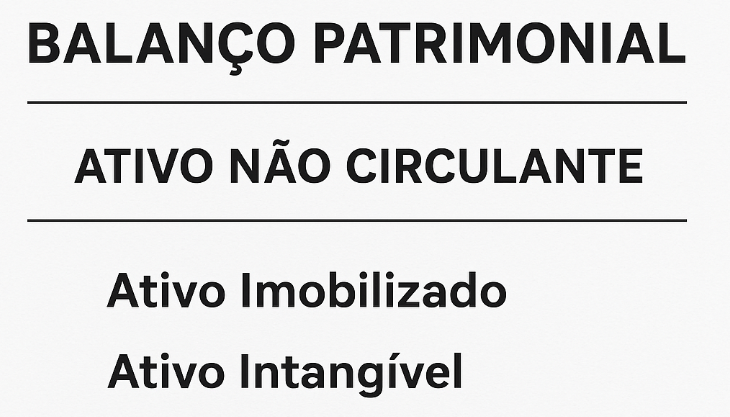
Fixed Asset
These are tangible assets; that is, physical goods, allocated in the non-current asset group, such as machinery, equipment, vehicles, and real estate, that a company owns and uses to generate income or for its operations and provision of services. They have a long useful life, typically greater than one year. These assets are not primarily intended for short-term sale, but rather continue to support the company's business activities and bring economic benefits through their use..
Intangible Asset
These are intangible assets; that is, they have no physical form, and are also allocated in the non-current asset group, such as trademarks, patents, copyrights, software, and licenses, that a company owns and that bring benefits to its operations. Intangible assets have a useful life greater than one year, are listed in this group on the balance sheet, where their acquisition is reflected, and their amortization is subsequently performed over time.
In summary, both are in the same group but have distinct purposes.
Example
2: Does Event 8.8 cover all fixed assets?
No. Event 8.8 covers only the tangible assets of the fixed asset group, provided the company is framed within the regular IBS and CBS regime.
This occurs because the fixed asset group is composed exclusively of tangible assets.
Intangible assets — such as trademarks, patents, and software — belong to the non-current asset group but are not classified as fixed assets for the purposes of this event.
Currently, there is no specific event for intangible assets yet.
28. Credit Condition in Transfers between establishments belonging to the same taxpayer
A: The credit utilization (or credit taking), whether related to fixed assets or to other acquisitions of goods and services that do not have specific treatment in LC No. 214/2025, remains conditioned upon the effective assessment and payment of the tax due on the operation — either by the supplier or, in cases provided for by law, by the acquirer itself (e.g., tax liability or anticipated payment). Thus, even when there is an establishment transfer or continuity of fixed asset credit, the credit appropriation can only occur if the fundamental requirement is met: the tax levied on the operation must have been duly paid.
It should be noted that LC No. 214/2025 is not explicit regarding the process of utilizing fixed asset credit linked to the tax payment. However, until new regulations or complementary norms are published (e.g., ENCAT Technical Notes or Federal Revenue instructions), the already consolidated understanding prevails: the credit can only be utilized after the effective payment of the corresponding debit in the preceding stage of the chain.
Visão Geral
Import HTML Content
Conteúdo das Ferramentas
Tarefas