
Histórico da Página
...
The machine acquisition is recorded as a "fixed asset in progress" during the assembly period (6 months).
The right to an IBS and CBS credit arises proportionally to the payment of the tax due, even if the asset remains in the assembly phase.
It is not necessary to wait for the transfer to the "machinery and equipment" account or for depreciation to begin to appropriate the credits.
27.
...
Is there an obligation to submit Event 8.8,
...
and if so, does it apply to all companies and all fixed assets (tangible and intangible), regardless of how they were acquired?
A: Yes, but only for tangible assets, and for taxpayers who are under the regular IBS and CBS regime; that is, those within the non-cumulativity regime¹ (Article 47 of Complementary Law (LC) No. 214/2025). This event will be applied every time the acquirer carries out the immobilization, the tangible asset, or services linked to this tangible asset. The submission of the event guarantees the appreciation of any requests for reimbursement of the respective credit, pursuant to Article 40, I of LC 214/2025.
1:
...
Broad non-cumulativity allows taxpayers subject to the regular regime to credit themselves with IBS and CBS in all acquisition operations of goods and services. However, exempted and immune activities as per Article 51 of LC No. 214/2025, or even acquisitions of assets intended for personal use as per Article 57 of LC No. 214/2025, will not be able to obtain credits upon the acquisition of these assets.
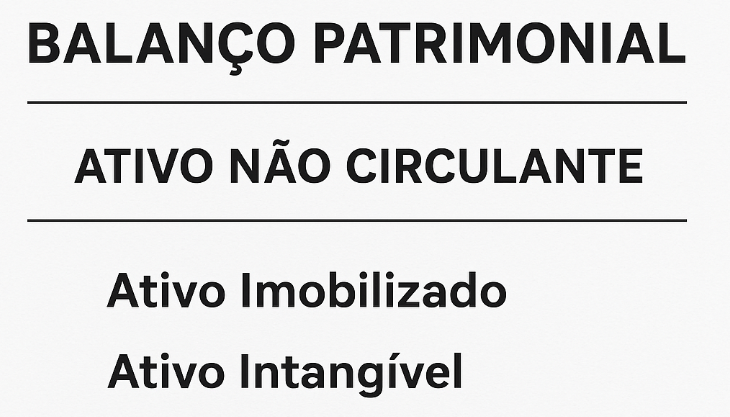
Fixed Asset
These are tangible assets; that is, physical goods, allocated in the non-current asset group, such as machinery, equipment, vehicles, and real estate, that a company owns and uses to generate income or for its operations and provision of services. They have a long useful life, typically greater than one year. These assets are not primarily intended for short-term sale, but rather continue to support the company's business activities and bring economic benefits through their use..
Intangible Asset
These are intangible assets; that is, they have no physical form, and are also allocated in the non-current asset group, such as trademarks, patents, copyrights, software, and licenses, that a company owns and that bring benefits to its operations. Intangible assets have a useful life greater than one year, are listed in this group on the balance sheet, where their acquisition is reflected, and their amortization is subsequently performed over time.
In summary, both are in the same group but have distinct purposes.
Example
2: Does Event 8.8 cover all fixed assets?
No. Event 8.8 covers only the tangible assets of the fixed asset group, provided the company is framed within the regular IBS and CBS regime.
This occurs because the fixed asset group is composed exclusively of tangible assets.
Intangible assets — such as trademarks, patents, and software — belong to the non-current asset group but are not classified as fixed assets for the purposes of this event.
Currently, there is no specific event for intangible assets yet.
28.Credit Condition in Transfers between establishments belonging to the same taxpayer
A: The credit utilization (or credit taking), whether related to fixed assets or to other acquisitions of goods and services that do not have specific treatment in LC No. 214/2025, remains conditioned upon the effective assessment and payment of the tax due on the operation — either by the supplier or, in cases provided for by law, by the acquirer itself (e.g., tax liability or anticipated payment). Thus, even when there is an establishment transfer or continuity of fixed asset credit, the credit appropriation can only occur if the fundamental requirement is met: the tax levied on the operation must have been duly paid.
It should be noted that LC No. 214/2025 is not explicit regarding the process of utilizing fixed asset credit linked to the tax payment. However, until new regulations or complementary norms are published (e.g., ENCAT Technical Notes or Federal Revenue instructions), the already consolidated understanding prevails: the credit can only be utilized after the effective payment of the corresponding debit in the preceding stage of the chain
Ativo imobilizado
São bens tangíveis, ou seja, bens físicos, alocados no grupo do ativo não circulante, por exemplo máquinas, equipamentos, veículos e imóveis, que uma empresa possui e utiliza para gerar renda ou para suas operações e de prestação de serviços. Eles possuem uma vida útil longa, normalmente superior a um ano. Estes bens, num primeiro momento não são destinados à venda no curto prazo, mas sim continuam suportando as atividades empresariais da companhia e trazem benefícios econômicos com a sua utilização.
Ativo intangível
São bens intangíveis, ou seja, não possui forma física, são alocados também no grupo do ativo não circulante, por exemplo marcas, patentes, direitos autorais, softwares, licenças, que uma empresa possui e traz benefícios em suas operações. Os ativos intangíveis possuem vida útil superior a um ano, são listados neste grupo no balanço patrimonial, onde a sua aquisição é refletida e, posteriormente é efetuada sua amortização ao longo do tempo.
Em resumo, ambos são do mesmo grupo, mas com finalidades distintas.
Exemplo
2: O evento 8.8 cobre todos os bens do imobilizado?
Não. O evento 8.8 abrange apenas os bens tangíveis do imobilizado, desde que a empresa esteja enquadrada no regime regular de IBS e CBS.
Isso ocorre porque o grupo de imobilizado é composto exclusivamente por bens tangíveis.
Já os bens intangíveis — como marcas, patentes e softwares — pertencem ao ativo não circulante, mas não são classificados como imobilizado para fins deste evento.
Atualmente, ainda não há um evento específico para bens intangíveis.
28. Condição do Crédito nas Transferências entre estabelecimentos pertencentes ao mesmo contribuinte
R: O aproveitamento do crédito, seja em relação ao imobilizado ou a outras aquisições de bens e serviços que não tenham tratamento específico na LC nº 214/2025, permanece condicionado à efetiva apuração e recolhimento do imposto devido na operação – seja pelo fornecedor ou, nos casos previstos em lei, pelo próprio adquirente (ex.: responsabilidade tributária ou recolhimento antecipado). Assim, mesmo quando há transferência de estabelecimento ou continuidade de crédito de imobilizado, a apropriação do crédito somente pode ocorrer se atendido o requisito fundamental: o imposto incidente sobre a operação precisa ter sido devidamente recolhido.
...
.
Visão Geral
Import HTML Content
Conteúdo das Ferramentas
Tarefas