Consult the correct documentation:
This documentation refers to the new process editor of the platform. If you are using the current process editor, access Configure activities and flows.
LANGUAGE


Speaking of Subprocess component...
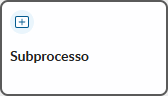
The Subprocess component represents a point in the process where another complete process, which is the subprocess, starts. In other words, this component represents a set of grouped activities – that form a process – within a main or larger process, allowing encapsulation of this set of activities within a single component to facilitate the reading and maintenance of the main process diagram.
With the Subprocess component, you can break down large and complex processes into smaller parts – subprocesses – improving comprehension of the steps, as it prevents the diagrams from becoming confusing, simplifying the modeling and management of the process as a whole.
You can also reuse a workflow in multiple processes or at various points within the same process, which ensures consistency of the steps, minimizes errors, saves modeling time, and reduces the effort of configuring components.
EXAMPLE
If your company has some approval steps for amounts that are common in several processes, you can group these steps into a Financial Approval process and reuse it from the Subprocess component in all other processes that, at some point, need to go through these same approval steps.
When a request from the main process reaches the subprocess step, it is paused, and a new request for the subprocess is created. When the subprocess request is completed, the main process request can be resumed to continue in the main flow until its completion.
If the main process flow allows for a return, when the request reaches the subprocess step, a new request opens in the subprocess, and the main process request is blocked until the subprocess request is completed. As soon as the subprocess request is completed, the main process request is sent back to the step prior to the subprocess, so it can continue in the main flow until its completion.
When using the Subprocess component, you can also share information between the forms of the main process and the subprocess. More details are described in the topic Sending data between the process and the subprocess.

EXAMPLE
In an Employee Registration process, the HR department does the first registration in the company's people management system. After that, you need to grant access to the internal tools that the employee will use in their daily activities. However, this is a responsibility of the IT department, which also needs the approval of the manager of the new employee to grant the accesses. In this case, the execution steps of the IT department can be a subprocess within the main employee registration process. The main process will send some employee data – such as name, area of expertise, tools they will use – to the subprocess, and the subprocess will return an email. After the IT steps are completed, HR needs to complete the registration with the email sent by IT.

Data sending between the process and the subprocess
The Subprocess component allows you to share information between the main process and the subprocess, reducing the need to manually re-enter data. For this, both processes – the main one and the subprocess – must have a linked form, thus enabling the flow of information between the processes in a simple and transparent manner.
The definition of the sending and receiving of information between the processes is based on the configuration of the fields in both forms, allowing you to specify which values to share and the direction of each:
- main process
 subprocess: values are sent from the main process to the subprocess;
- main process
 subprocess: values are sent from the subprocess to the main process.
EXAMPLES OF VALUE DIRECTION
- Send value from the main process form field (source) to the subprocess form field (target): Name User Name;
- Send value from the subprocess form field (source) to the main process form field (target): Name User Name;
- Send and receive the value from the main process form field and the subprocess form field (both send and receive the value from each other): Name
 User Name.
Important!
Each field can receive the value of only one field; that is, you cannot configure the same field to receive values from more than one field.
EXAMPLE
This configuration is not allowed:
- First Name User's First Name
- Last Name User's Last Name
The User's First Name field of a subprocess cannot be configured to receive the values from the First Name and Last Name fields of the process, since, if this were allowed, the second value received would overwrite the first.
View guided tour of the Subprocess component
01. In the process diagram, click the Subprocess component 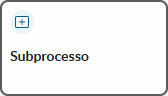 .
.
02. On the right side, where the component settings are displayed, click  Usage Guide – located at the bottom.
03. View the presentation of the highlighted feature.
04. Click Next to proceed to the presentation of the next feature.
When there are previous features, you can click Back to review them.
05. Upon finishing the guided tour, click Finish.
If you wish, you can click Back to review the previous features before finishing.
Configure Subprocess component
01. In the process diagram, click the Subprocess component you want to configure.
The available settings are displayed on the right side.
02. In the General tab, define the general information for the component that represents another process within the main process.
Title
Name of the step that represents the beginning of another process within the main process. You can also change the name directly on the component by clicking on its current name and then on Edit – located on the right side.
EXAMPLE
In an Asset Purchase process for a company, you could name the component Financial Approval, comprising the specific approval steps of the finance area.
Activity Instructions
Instructions aimed at making it easier to understand what happens in this step, which is a subprocess, such as data to be sent to the subprocess or data to be received from the subprocess. The Information tab of the request displays the instructions.
Tip!
When preparing the instructions for a step, it is common to need to search for information from other documents or websites. The platform has the concept of hyperlink, which allows you to include an instruction document as well as Internet addresses through external documents, both stored in the Documents resource, avoiding information replication and facilitating navigation. To do this, simply use the format [WD:codigodoc], replacing codigodoc with the numeric code of the document.
Process
Process to be included within the main process as a subprocess. You can use any existing process on the platform as a subprocess within another process. However, it must have at least one published version.
Transfer Attachments
When enabled, it determines that all attachments added to the main process request be copied to the request created in the subprocess at issue. However, the opposite does not occur, meaning that attachments added to the subprocess request are not copied to the main process request. This option is only enabled when the main process already has a linked form, and a process that has at least one published version is selected in the Process field.
Joint Cancellation
When activated, it determines that if the main process request is canceled, the subprocess request is also canceled. However, the opposite does not occur, meaning that if the subprocess request is canceled, the main process request is not. This option is only enabled when the main process already has a linked form and a process that has at least one published version has been selected in the Process field.
Move Activity
When activated, it determines that, as soon as the request reaches the step that is the subprocess, it starts immediately, with no need to access the Task Center. In other words, when sending the main request to the subprocess, the first step of the subprocess – or the first ones, if the subprocess flow is alternative – is displayed for selection and definition of the responsible party when the assignment type allows. This option is only enabled when the main process already has a linked form, and a process that has at least one published version is selected in the Process field.
03. Click Configure Fields to define the data sharing between the forms of the main process and the subprocess.
This option is only enabled when the main process already has a linked form, and a process that has at least one published version is selected in the Process field.
The field configuration allows you to define which values to share between the forms of the two processes and the direction of each. You can send data from the main process form to the subprocess form and vice versa. Find more details at Data Sending between the Process and the Subprocess.
04. Click Add  .
.
05. In the Process Fields column, select the field from the main process form to send or receive the value from the subprocess form – according to what is defined in the Direction column.
06. In the Direction column, define the direction of the value sharing for that field; that is, whether the field value should be sent to the subprocess or received from the subprocess.
To change the direction, simply click the arrow until the desired direction is displayed.
The direction options are:
- Send the value: the value contained in the selected field of the main process is sent to the field of the subprocess selected in the Subprocess Fields column.
- Receive the value: the selected field of the main process receives the value from the field of the subprocess selected in the Subprocess Fields column.
- Send and receive the value: the value contained in the selected field of the main process is sent to the field of the subprocess selected in the Subprocess Fields column and, subsequently, the selected field of the main process receives back the value contained in the field of the subprocess selected in the Subprocess Fields column.
07. In the Subprocess Fields column, select the field of the subprocess form that will send or receive – according to what is defined in the Direction column – the value from the field of the main process form that is selected in the Main Process Fields column.
08. Click Save  – located on the right side.
To cancel adding the value transfer between the fields, simply click Cancel – located on the right side – instead of Save .
The Status column displays the status of the value sharing relationship between the fields of the main process form and the subprocess. The indicators are:
- → indicates that the sharing between the fields is correct and functional;
 → indicates that the sharing between the fields is inconsistent, such as a field being edited or no longer existing in one of the forms.
You can edit the relationship between the fields by clicking Edit – located on the right side – and changing the desired items. To remove the added relationship between the fields, simply click Remove  – also located on the right side.
09. Once you have completed the configuration of all desired sharing relationships between the fields, click Save.
10. Click the Assignment tab to see who will be responsible for the request to be created in the subprocess.
The displayed assignment is the one configured in the first step of the subprocess; that is, the request to be opened in the subprocess will be sent to the responsible party in accordance with the type of assignment defined in the subprocess.
11. Click Save draft – located on the right side of the top bar – to save the settings made in the Subprocess component.
12. In the displayed message, click Ok, I understand.
Configure data sharing between processes
01. In the process diagram, click the Subprocess component for which you want to configure data sharing between the main process and subprocess forms.
02. In the General tab, click Configure fields.
This option is only enabled when the main process already has a linked form, and a process with at least one published version is selected in the Process field.
The field configuration allows you to define which values to share between the forms of the two processes and the direction of each. You can send data from the main process form to the subprocess form and vice versa. Find more details at Sending data between the process and the subprocess.
03. Click Add .
04. In the Process fields column, select the field from the main process form to send or receive the value from the subprocess form – in accordance with what is defined in the Direction column.
05. In the Direction column, define the direction of the value sharing for that field; that is, whether the field value should be sent to the subprocess or received from the subprocess.
To change the direction, simply click the arrow until the desired direction is displayed.
The direction options are:
- Send the value: the value contained in the selected field of the main process is sent to the field of the subprocess selected in the Subprocess fields column.
- Receive the value: the selected field of the main process receives the value from the field of the subprocess selected in the Subprocess fields column.
- Send and receive the value: the value contained in the selected field of the main process is sent to the field of the subprocess selected in the Subprocess fields column and, subsequently, the selected field of the main process receives back the value contained in the field of the subprocess selected in the Subprocess fields column.
06. In the Subprocess Fields column, select the form field of the subprocess that will send or receive – according to what was defined in the Direction column – the value of the form field of the main process that was selected in the Main Process Fields column.
07. Click on Save – located on the right side.
To cancel adding the relationship between the fields, simply click Cancel – located on the right side – instead of Save.
The Status column displays the status of the value sharing relationship between the form fields of the main process and the subprocess. The indicators are:
- → indicates that the sharing between the fields is correct and functional;
- → indicates that the sharing between the fields is inconsistent, such as a field being edited or no longer existing in one of the forms.
You can edit the relationship between the fields by clicking Edit – located on the right side – and changing the desired items. To remove the added relationship between the fields, simply click Remove – also located on the right side.
08. Once you have completed the configuration of all desired sharing relationships between the fields, click Save.
09. Click Save draft – located on the right side of the top bar – to save the changes made to the Subprocess component.
10. In the displayed message, click Ok, I understand.
Editing data submission between processes
01. In the process diagram, click the Subprocess component for which you want to edit the data sharing between the main process and subprocess forms.
02. In the General tab, click Configure fields.
03. Locate the field relationship you wish to edit.
04. Click Edit – located on the right side.
05. Change the desired items.
06. Click Save – located on the right side.
07. Once you have completed all desired changes, click Save – located in the bottom right corner.
08. Click Save draft – located on the right side of the top bar – to save the changes made to the Subprocess component.
09. In the displayed message, click Ok, I understand.
Remove data sharing between processes
01. In the process diagram, click the Subprocess component from which you want to remove the data sharing between the main process forms and the subprocess.
02. In the General tab, click on Configure fields.
03. Locate the list of fields you want to remove.
04. Click Remove– located on the right side.
05. In the confirmation message displayed, click Confirm to confirm the removal of the sharing relationship between the fields.
06. Once you have completed all desired removals, click Save – located in the lower right corner.
07. Click Save draft – located on the right side of the top bar – to save the changes made to the Subprocess component.
08. In the displayed message, click Ok, I understand.
Frequently asked questions
Check here some frequently asked questions about the Subprocess component.
Can the Subprocess component impact the performance of the process?
Can I reuse a subprocess in different parts of the same process or in other processes?
What happens if a subprocess fails or returns a rejection?
Can the subprocess have different assignments and responsible parties from the main process?
What happens if you edit or delete a field in one of the forms configured to share data?

Attention!
This documentation is valid from the Voyager (2.0) update onwards. If you are using a previous update, it may contain information different from what you see on your platform.
Visão Geral
Import HTML Content
Conteúdo das Ferramentas
Tarefas